
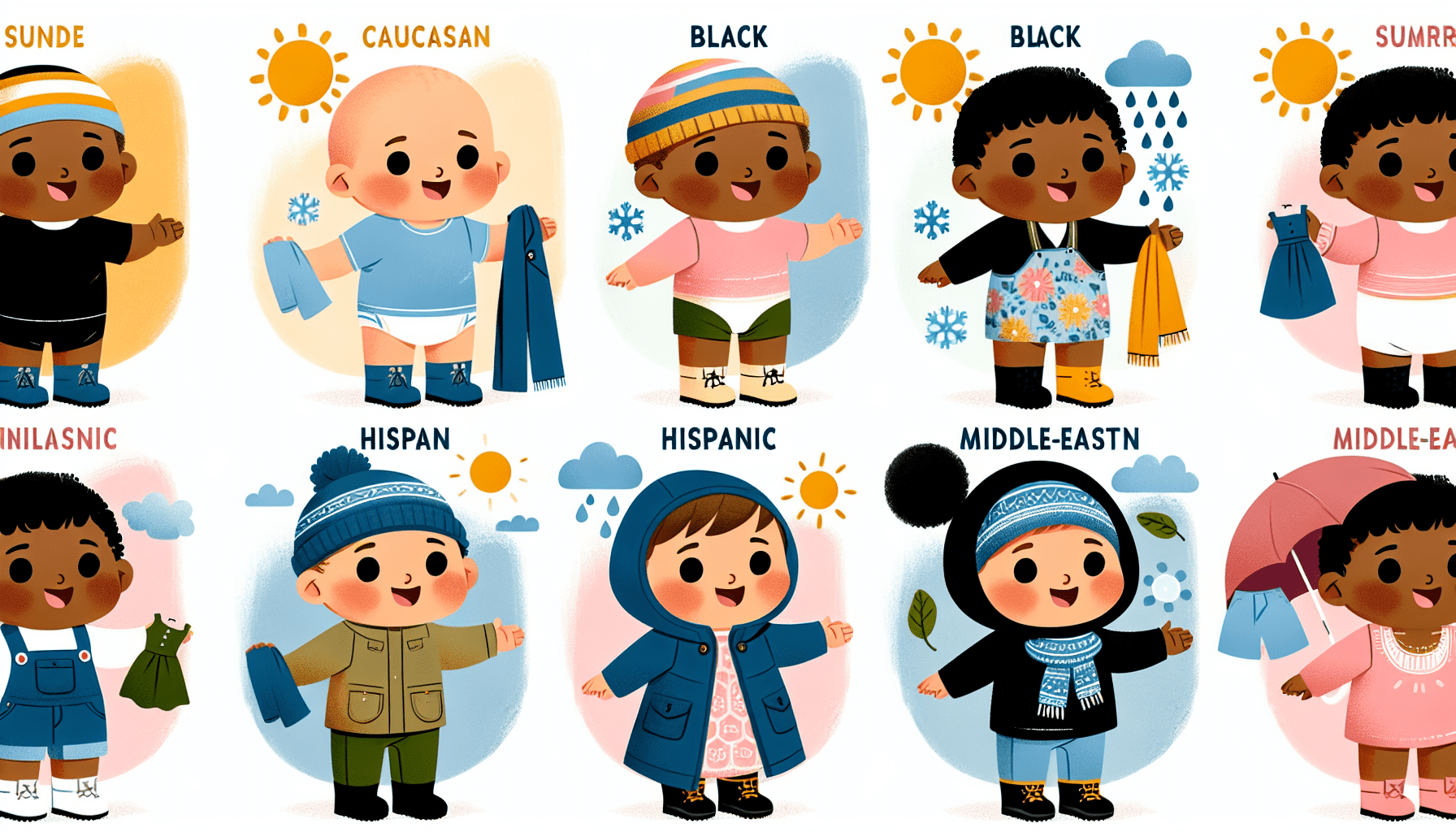
Are you a parent looking for tips on how to dress your baby for different weather conditions? It can be tricky to figure out the right clothing choices that keep your little one comfortable and safe. In this article, we will explore some practical and safe ways to dress your baby for varying weather conditions, ensuring that they are always snug and protected no matter the forecast. So, whether it’s a scorching summer day or a chilly winter evening, you’ll be equipped with the knowledge to dress your baby appropriately.
Cold Weather
Layering is key
When dressing your baby for cold weather, layering is key. Start with a lightweight, moisture-wicking base layer to keep your baby dry and comfortable. Then, add a warm and insulating mid-layer such as a fleece or wool sweater. Finally, top it off with a waterproof and windproof outer layer to protect your baby from the elements. This layering system allows you to easily adjust your baby’s clothing throughout the day as the temperature changes.
Use a hat and mittens
To keep your baby’s head and hands warm in cold weather, be sure to use a hat and mittens. Choose a hat that covers the ears and is made of a warm and breathable material like fleece or wool. Mittens or gloves will help protect your baby’s hands from the cold. Opt for mittens with a strap or elastic around the wrists to ensure they stay in place.
Choose warm and breathable materials
When selecting clothing for your baby in cold weather, opt for warm and breathable materials. Natural fibers like cotton and wool are excellent choices as they provide insulation while allowing moisture to escape. Avoid synthetic materials as they can trap moisture and make your baby uncomfortable. Additionally, be sure to choose clothing that fits well, as tight or restrictive clothing can interfere with circulation and lead to temperature imbalances.
Hot Weather
Opt for lightweight and loose clothing
In hot weather, it’s important to dress your baby in lightweight and loose-fitting clothing to help them stay cool. Choose breathable fabrics such as cotton or linen that allow air to circulate and heat to escape. Avoid synthetic materials that can trap heat and moisture against your baby’s skin. Loose clothing also helps to create a barrier between your baby’s skin and the sun, reducing the risk of overheating and sunburn.
Keep baby hydrated
When the weather is hot, it’s crucial to keep your baby hydrated. Offer them breast milk, formula, or water frequently to ensure they stay properly hydrated. If your baby is under six months of age and exclusively breastfed, they may not need additional water, as breast milk provides the necessary hydration. However, if your baby is formula-fed or over six months of age, you can offer small amounts of water between feeds to prevent dehydration.
Use sunscreen
Protect your baby’s delicate skin from the sun’s harmful rays by applying sunscreen. Choose a sunscreen specifically formulated for babies and toddlers, with a minimum SPF of 30. Apply a generous amount to all exposed skin, including the face, arms, and legs, at least 15 minutes before going outside. Reapply sunscreen every two hours, or more frequently if your baby gets wet or sweats excessively. Remember to also keep your baby in the shade as much as possible, especially during the hottest parts of the day.
Rainy Weather
Invest in a waterproof jacket
When it’s rainy outside, investing in a waterproof jacket for your baby is essential. Look for a jacket with a water-resistant or waterproof outer shell to keep your baby dry. Ensure that the jacket has a hood to provide additional protection for your baby’s head. Opt for one with a breathable lining to prevent overheating and discomfort. A well-fitting jacket will help keep your baby cozy and dry during wet weather outings.
Use waterproof shoes or boots
To protect your baby’s feet from getting wet and cold, it’s important to use waterproof shoes or boots in rainy weather. Look for shoes or boots that have a waterproof outer layer and a non-slip sole to keep your baby safe on wet surfaces. Choose a style that is easy to put on and take off, and make sure they fit properly to avoid discomfort and blisters. Don’t forget to dry the shoes or boots thoroughly after each use to prevent mold and odors.
Pack an extra set of clothes
When venturing out in rainy weather, it’s always a good idea to pack an extra set of clothes for your baby. Accidents happen, and your baby may get wet or muddy despite your best efforts. Having spare clothing on hand ensures that you can quickly change your baby into dry clothes and keep them comfortable throughout the day. Pack a waterproof bag to store wet or soiled clothing until you can get home and properly clean them.
Sunny Weather
Dress baby in lightweight and breathable clothing
For sunny weather, it’s important to dress your baby in lightweight and breathable clothing to keep them cool. Choose loose-fitting garments made from natural fibers such as cotton or linen that allow air to circulate and heat to escape. Light colors reflect sunlight and help to keep your baby’s body temperature down. Avoid dark colors as they absorb heat and can cause your baby to overheat.
Use a sunhat and sunglasses
Protect your baby’s delicate skin and eyes from the sun’s harmful rays by using a sunhat and sunglasses. Choose a wide-brimmed hat that provides shade for your baby’s face and neck, and ensure it has a chin strap or adjustable fastening to keep it secure. Look for sunglasses specifically designed for babies with 100% UV protection to shield their eyes from harmful rays. Opt for a wrap-around style to ensure maximum coverage.
Apply sunscreen
Even in cloudy weather, it’s important to apply sunscreen to protect your baby’s skin from the sun’s rays. Choose a sunscreen specifically formulated for babies and toddlers, with a minimum SPF of 30. Apply it generously to all exposed skin, including the face, arms, and legs, at least 15 minutes before going outside. Reapply sunscreen every two hours, or more frequently if your baby gets wet or sweats. Remember to seek shade during the hottest parts of the day, typically between 10 a.m. and 4 p.m.
Windy Weather
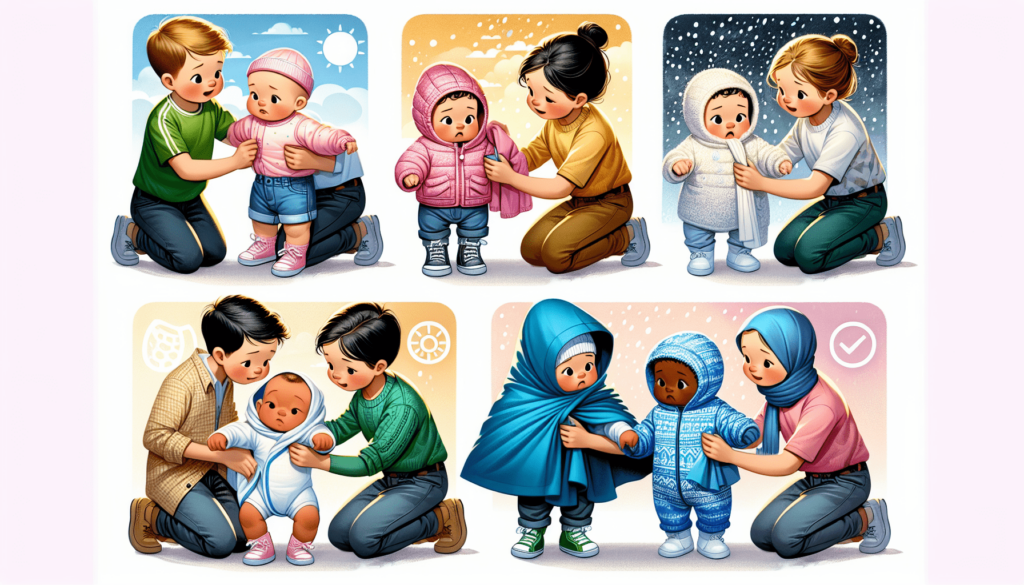
Dress baby in layers
Windy weather can create a chill in the air, so it’s essential to dress your baby in layers to provide insulation. Opt for a moisture-wicking base layer followed by a warm mid-layer, such as a fleece or wool sweater. Top it off with a windproof jacket to protect your baby from the wind. This layering system allows you to add or remove clothing as needed to regulate your baby’s body temperature.
Choose a windproof jacket
To shield your baby from the wind, choose a windproof jacket with a snug fit. Look for one made from a wind-resistant material such as nylon or polyester. Ensure that the jacket has a high collar and a hood to provide extra protection for your baby’s face and head. Additionally, check that the jacket has adjustable cuffs and a drawstring hem to prevent drafts from getting in.
Protect the face with a hat or scarf
To protect your baby’s face from the wind, use a hat or scarf. Choose a hat that covers the ears and has a chin strap or adjustable fastening to keep it in place. Opt for a hat made from a warm and breathable material such as fleece or wool. A scarf can also be used to wrap around your baby’s face, providing an extra layer of protection from the wind and cold.
Humid Weather
Opt for lightweight clothing
In humid weather, it’s important to dress your baby in lightweight clothing to help them stay cool and comfortable. Choose garments made from breathable fabrics such as cotton or linen that allow air to circulate and moisture to evaporate. Loose-fitting clothing helps to minimize sweat and keeps your baby’s skin dry. Avoid synthetic materials that can trap heat and moisture against your baby’s skin.
Use a fan or air conditioning to keep baby cool
To combat the humidity and keep your baby cool, use a fan or air conditioning in your home or car. Position a fan in the room where your baby sleeps or plays to provide a gentle breeze. If you’re using an air conditioner, set it to a comfortable temperature, preferably between 68-72°F. Avoid using fans or air conditioning directly on your baby, as it can cause them to become too cold.
Keep baby hydrated
In humid weather, it’s important to keep your baby hydrated. Offer them breast milk, formula, or water frequently to ensure they stay adequately hydrated. If your baby is under six months of age and exclusively breastfed, they may not need additional water, as breast milk provides the necessary hydration. However, if your baby is formula-fed or over six months of age, you can offer small amounts of water between feeds to prevent dehydration.
Snowy Weather
Dress baby in layers
When dressing your baby for snowy weather, layering is essential to keep them warm and protected. Start with a moisture-wicking base layer to keep your baby dry. Add a warm mid-layer such as a fleece or wool sweater for insulation. Finally, top it off with a waterproof and insulated snowsuit or jacket to protect your baby from snow and cold temperatures. Layering allows you to adjust your baby’s clothing as needed to ensure their comfort.
Use insulated and waterproof boots
To keep your baby’s feet warm and dry in snowy weather, use insulated and waterproof boots. Look for boots that have a waterproof outer layer and a warm lining such as fleece or faux fur. Make sure the boots have a secure closure, such as Velcro or zipper, to prevent snow from entering. Additionally, consider buying boots that are one size larger to allow for extra layers of socks.
Cover exposed skin
In snowy weather, it’s important to cover your baby’s exposed skin to protect them from frostbite and cold temperatures. Use a warm and breathable hat that covers the ears to prevent heat loss. Protect their little hands with waterproof and insulated mittens or gloves. Don’t forget to apply a suitable sunscreen to any exposed areas of skin, as the sun’s rays can still be harmful even in snowy conditions.
Foggy Weather
Choose bright and reflective clothing
In foggy weather, visibility can be reduced, so it’s important to choose bright and reflective clothing for your baby. Dress them in garments that have high-visibility colors such as neon or bright yellow. Additionally, look for clothing with reflective elements, such as stripes or patches, that reflect light and make your baby more visible to others, especially vehicles, in low-light conditions.
Use a fog-resistant stroller cover
To protect your baby from the moisture and reduced visibility in foggy weather, use a fog-resistant stroller cover. Choose a cover that is made from a waterproof material and has ventilation panels to allow air circulation. Look for one that has a clear window so you can easily check on your baby without removing the cover. Ensure that the cover securely attaches to the stroller to protect your baby from wind and rain as well.
Keep a close eye on baby
In foggy weather, it’s important to keep a close eye on your baby. Reduced visibility can make it harder to spot hazards or other people. Stay within arm’s reach of your baby at all times and be vigilant when crossing roads or near bodies of water. Consider using a baby carrier instead of a stroller in foggy conditions, as it allows you to keep your baby close and easily maneuver through crowded or uneven terrain.
Mild Weather
Dress baby in comfortable and breathable clothing
In mild weather, it’s ideal to dress your baby in comfortable and breathable clothing to keep them comfortable throughout the day. Choose garments made from lightweight fabrics such as cotton or bamboo that allow air to circulate and prevent overheating. Opt for loose-fitting clothing that allows your baby to move freely. Layers are still beneficial in mild weather, as they can easily be added or removed as the temperature fluctuates.
Use a light jacket or sweater
In mild weather, a light jacket or sweater may be necessary to keep your baby comfortable during cooler periods. Choose a jacket or sweater made from a lightweight and breathable material like cotton or fleece. Look for one that is easy to put on and take off, with a zipper or buttons, to accommodate quick changes in temperature. Layer the jacket or sweater over a short-sleeved or long-sleeved top, depending on the weather.
Check the temperature throughout the day
In mild weather conditions, temperatures can change throughout the day, so it’s important to regularly check the temperature. Dress your baby in layers that can be easily added or removed as needed. Use a thermometer or weather app to monitor the temperature, especially during early morning or evening hours when it tends to be cooler. Adjust your baby’s clothing accordingly to ensure their comfort and well-being.
Freezing Weather
Layer baby’s clothing
In freezing weather, layering is crucial to keep your baby warm and protected. Start with a moisture-wicking base layer to keep your baby dry. Add a warm and insulating mid-layer, such as a fleece or wool sweater. Finally, top it off with a waterproof and insulated snowsuit or jacket to shield your baby from the cold. Layering allows you to adjust your baby’s clothing as needed, providing optimal warmth and comfort.
Cover extremities with warm accessories
To protect your baby’s extremities from the freezing cold, be sure to cover them with warm accessories. Use a hat that covers their ears to keep their head warm. Mittens or gloves will help protect their hands from the cold. Opt for mittens with a strap or elastic around the wrists to keep them in place. Finally, use warm and insulated boots or booties to keep their feet cozy and protected.
Avoid prolonged exposure to cold
In freezing weather, it’s important to avoid prolonged exposure to the cold. Limit the amount of time your baby spends outside in extreme temperatures, especially during frosty and windy conditions. If it’s necessary to go outside, ensure that your baby is dressed appropriately in warm layers. Monitor your baby closely for signs of discomfort or distress, such as shivering or redness in the skin. Above all, prioritize their safety and well-being in cold weather conditions.
With these tips and guidelines, you can confidently dress your baby for various weather conditions, ensuring their comfort, safety, and well-being. Remember that babies’ temperature regulation is different from adults, so it’s crucial to pay close attention to their cues and adjust their clothing accordingly. By understanding how to dress your baby for different weather conditions, you can enjoy outdoor adventures while keeping your little one happy and protected.
