
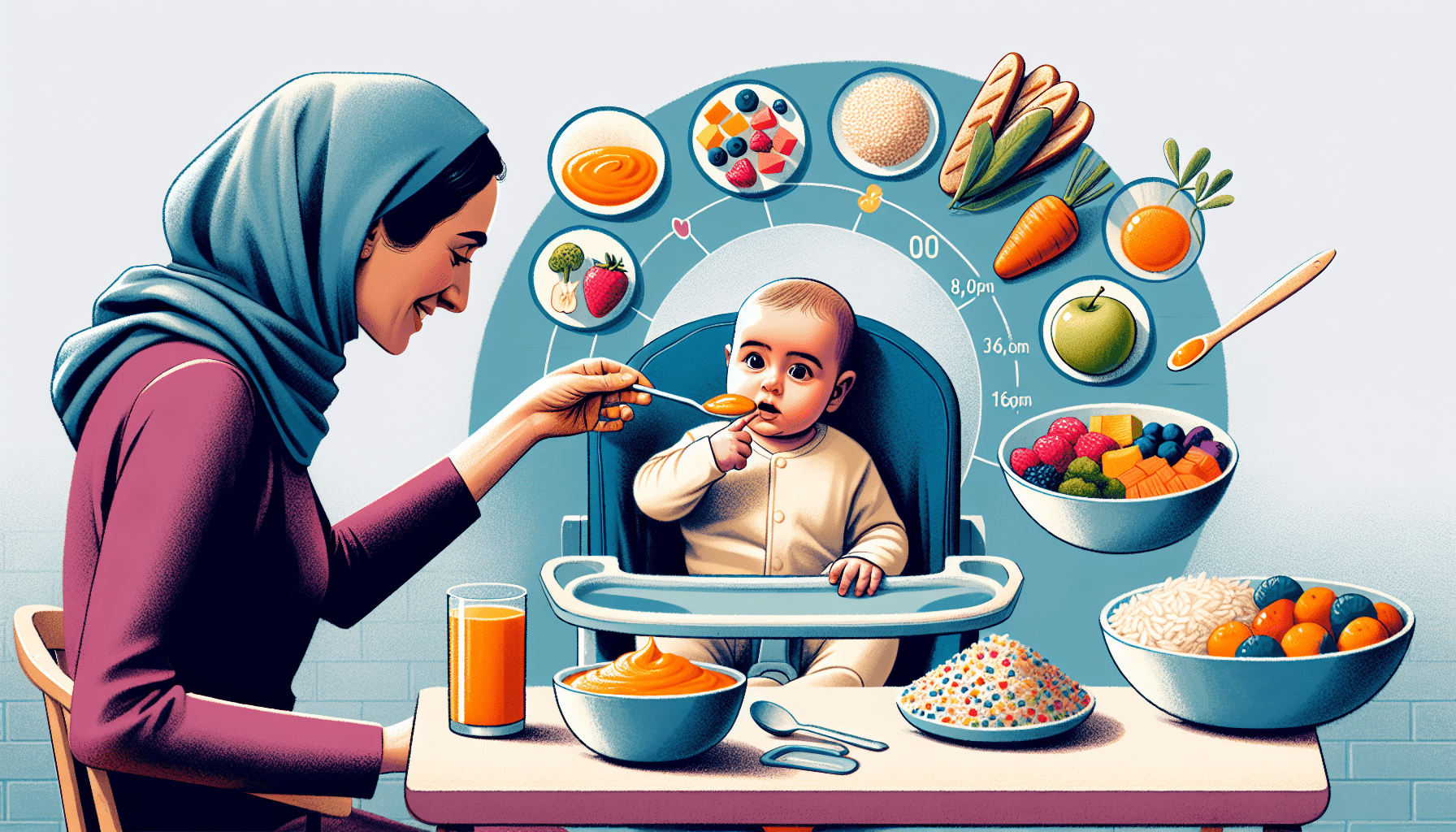
So, you’ve reached the exciting milestone of wanting to introduce your little one to solid foods, but you’re not quite sure where to start? Well, fear not! In this article, we’ll guide you through the process of introducing your baby to solid foods in a way that is safe, fun, and delicious. From choosing the right time to beginning with simple purees, we’ve got you covered every step of the way. Get ready to embark on this nutritious and adventurous journey with your baby!
Signs of Readiness
Observe for developmental signs
Before introducing solid foods to your baby, it’s important to observe for certain developmental signs that indicate they are ready. Some of these signs include:
- Your baby can sit upright with support.
- Your baby has good head and neck control.
- Your baby shows an interest in what you’re eating and tries to grab food from your plate.
- Your baby has lost the tongue-thrust reflex, which means they no longer push food out of their mouth with their tongue.
These signs show that your baby is physically and developmentally ready to start exploring solid foods.
Check for physical signs
Aside from developmental signs, it’s also essential to check for physical signs of readiness. These signs include:
- Your baby has doubled their birth weight.
- Your baby can close their mouth around a spoon.
- Your baby can move food from the front of their mouth to the back for swallowing.
- Your baby is able to chew or gum on soft foods.
If your baby demonstrates these physical signs, it indicates that their digestive system is ready to handle solid foods.
Consider age
While developmental and physical signs are crucial, it’s also important to consider your baby’s age when introducing solid foods. The American Academy of Pediatrics recommends starting solids around 6 months of age. By this time, most babies have reached the necessary developmental milestones and have a better ability to digest and tolerate solid foods.
However, every baby is different, and some may be ready a little earlier or later. Consulting with your pediatrician can provide personalized guidance based on your baby’s individual needs.
Choosing the Right Time
Consult with pediatrician
Before introducing solid foods to your baby, it’s always a good idea to consult with your pediatrician. They know your baby’s medical history and can provide specific advice based on their unique needs. Your pediatrician can guide you on the appropriate timing and help address any concerns or questions you may have.
Consider baby’s interest
While it’s essential to wait for the appropriate developmental signs, it’s also crucial to consider your baby’s interest in food. If your baby shows curiosity about what you’re eating, reaches for your food, or opens their mouth when a spoon approaches, it may be a good indication that they’re ready to start exploring solid foods.
Avoid introduction during stressful times
It’s important to choose the right time to introduce solid foods to your baby. Avoid introducing solids during stressful periods such as a move, a family vacation, or when your baby is unwell. Ideally, choose a time when both you and your baby are relaxed and able to focus on the process of introducing new foods.
Start with Single-Ingredient Foods
Iron-fortified baby cereals
When you begin introducing solid foods to your baby, it’s recommended to start with iron-fortified baby cereals. These cereals provide essential nutrients, especially iron, which is important for your baby’s growth and development. You can mix the cereal with breast milk, formula, or water to create a semi-liquid consistency that is easy for your baby to swallow.
Pureed fruits and vegetables
After your baby has successfully tried baby cereal, you can gradually introduce pureed fruits and vegetables. Start with single-ingredient purees such as mashed bananas, cooked sweet potatoes, or pureed peas. These foods offer a variety of flavors and textures for your baby to explore.
Protein-rich foods
Once your baby is comfortable with cereals, fruits, and vegetables, you can start introducing protein-rich foods. These may include pureed or finely mashed cooked meats, such as chicken or turkey, as well as puréed beans or lentils. Protein is important for your baby’s muscle and tissue development, so it’s essential to include it in their diet.
Introduce Allergenic Foods with Care
Consult with pediatrician/allergist
When introducing allergenic foods, it’s crucial to consult with your pediatrician or an allergist. They can provide guidance based on your baby’s individual risk factors and any family history of allergies. Some common allergenic foods include peanuts, tree nuts, eggs, dairy, soy, fish, and shellfish.
Introduce one allergen at a time
To minimize the risk of an allergic reaction, introduce one allergenic food at a time, waiting a few days between each new introduction. This approach allows you to monitor your baby for any signs of an allergic reaction and identify the specific food causing the reaction if it occurs.
Observe for allergic reactions
While introducing allergenic foods, it’s important to observe your baby for any signs of an allergic reaction. Symptoms of an allergic reaction may include hives, swelling of the lips or face, vomiting, diarrhea, difficulty breathing, or persistent coughing. If you notice any of these symptoms, stop giving the food immediately and consult your pediatrician.

Consistency and Texture Progression
Gradual transition to thicker textures
As your baby becomes more comfortable with purees, you can gradually transition to thicker textures. You can achieve this by slightly increasing the thickness of the purees or introducing mashed foods with small chunks. This progression allows your baby to develop their chewing and swallowing skills.
Mashed or finely chopped foods
Continue progressing the texture by offering mashed or finely chopped foods. These foods help your baby develop their oral motor skills and encourage them to chew with their gums or emerging teeth. Examples of mashed or finely chopped foods include soft fruits, cooked vegetables, and well-cooked pasta.
Introduce finger foods
Around 9 to 12 months, you can start introducing finger foods. Finger foods encourage self-feeding and the development of fine motor skills. Offer soft, bite-sized pieces of foods that are easy for your baby to grasp, such as small cubes of cooked vegetables, soft fruits, or well-cooked pasta spirals.
Mealtime Environment and Technique
Sit in an upright position
During mealtimes, it’s important to ensure that your baby sits in an upright position. This helps prevent choking and allows them to swallow food more easily. Whether your baby is in a high chair or sitting on your lap, make sure their back is straight, and they are well-supported.
Use age-appropriate utensils
When introducing solid foods, use age-appropriate utensils. For younger babies, soft-tipped spoons or small feeding spoons are ideal. As your baby grows, you can transition to softer, child-sized forks and spoons. Using the right utensils encourages your baby to engage in self-feeding and develop their motor skills.
Offer small portions
Start by offering small portions of food to your baby. This helps prevent overwhelming them with too much food at once and allows them to explore different flavors and textures slowly. You can always offer more if your baby still seems hungry, but remember to follow their cues and let them guide their own intake.
Guidelines for Introducing Water
Wait until around 6 months
While breast milk or formula should remain the primary source of nutrition for the first six months, you can introduce water to your baby around this time. Before six months, your baby’s kidneys are still developing, and they receive enough hydration from breast milk or formula.
Offer water from a cup
When introducing water, offer it from a cup rather than a bottle. Using a cup helps your baby practice their sipping skills and transition away from exclusively bottle-feeding. You can use a small, sippy cup or a regular cup with a spout designed for babies.
Avoid giving water with meals
Avoid giving water to your baby with meals, as it may fill them up and decrease their appetite for solid foods. Instead, offer water between meals or after solid food feedings to ensure your baby stays hydrated throughout the day.
Common Pitfalls to Avoid
Forcing or rushing the process
Introducing solid foods should be a gradual and enjoyable experience for your baby. Avoid forcing or rushing the process if your baby seems uninterested or reluctant. Remember that every baby develops at their own pace, and it’s important to respect their individual readiness and preferences.
Skipping certain food groups
When introducing solid foods, it’s important to offer a variety of food groups. Avoid skipping certain food groups, particularly those that provide essential nutrients such as iron-rich foods, fruits, vegetables, and protein sources. A varied diet ensures that your baby receives all the necessary nutrients for healthy growth and development.
Overly sweet or salty foods
While it’s tempting to introduce sweet or salty foods to entice your baby’s taste buds, it’s best to avoid overly sweet or salty foods. These types of foods can contribute to an unhealthy palate and may impact your baby’s long-term food preferences. It’s important to offer a balanced and nutritious diet that focuses on whole, natural foods.
Cues for Adjusting the Amount
Observe baby’s appetite and cues
As you introduce solids, it’s important to observe your baby’s appetite and cues to determine how much food to offer. Babies have varying appetites, and their intake can fluctuate from day to day. Pay attention to their signals of hunger and fullness, such as turning their head away from the spoon or showing disinterest. Trusting your baby’s cues helps foster a healthy relationship with food and supports their self-regulation.
Increase portion size gradually
As your baby progresses with solid foods, you can gradually increase the portion size. Adjust the amount of food you offer based on their appetite and satisfaction. Remember, it’s normal for the amount of solid food they consume to vary from day to day.
Trust baby’s self-regulation
Babies have an innate ability to self-regulate their food intake. Trusting your baby’s self-regulation means allowing them to determine how much they need to eat and respecting their cues of hunger and fullness. Avoid pressuring your baby to eat more or less than they desire, as this can disrupt their natural eating instincts.
Maintaining a Varied and Balanced Diet
Continue breastfeeding or formula
Introducing solid foods does not mean you should stop breastfeeding or formula feeding. Breast milk or formula remains a vital part of your baby’s nutrition, providing essential nutrients and antibodies. Continue breastfeeding or formula feeding on demand while gradually incorporating solid foods into their diet.
Offer a variety of fruits, vegetables, and proteins
To ensure a varied and balanced diet, offer a wide range of fruits, vegetables, and proteins to your baby. Different fruits and vegetables provide a variety of vitamins, minerals, and fiber. Protein sources can include lean meats, poultry, fish, legumes, or tofu. Offering a diverse array of foods exposes your baby to different flavors and nutrients.
Ensure adequate iron intake
Iron is a crucial nutrient for your baby’s growth and development, especially after six months when their iron stores begin to deplete. To ensure an adequate iron intake, include iron-rich foods such as iron-fortified cereals, lean meats, beans, lentils, and dark leafy greens in your baby’s diet. Iron-rich foods are necessary for the production of hemoglobin, which carries oxygen throughout the body.
In conclusion, introducing your baby to solid foods is an exciting milestone in their development. By observing for developmental signs, choosing the right time, and starting with single-ingredient foods, you can help your baby transition to solid foods with confidence. Introducing allergenic foods with care, progressing the consistency and texture gradually, and creating a positive mealtime environment are essential for your baby’s experience. Don’t forget to follow guidelines for introducing water, avoid common pitfalls, and trust your baby’s cues for adjusting the amount. Maintaining a varied and balanced diet, while continuing breastfeeding or formula, ensures that your baby receives the necessary nutrients for healthy growth and development. With patience, love, and a friendly approach, you can introduce your baby to a world of delicious and nutritious solid foods.
