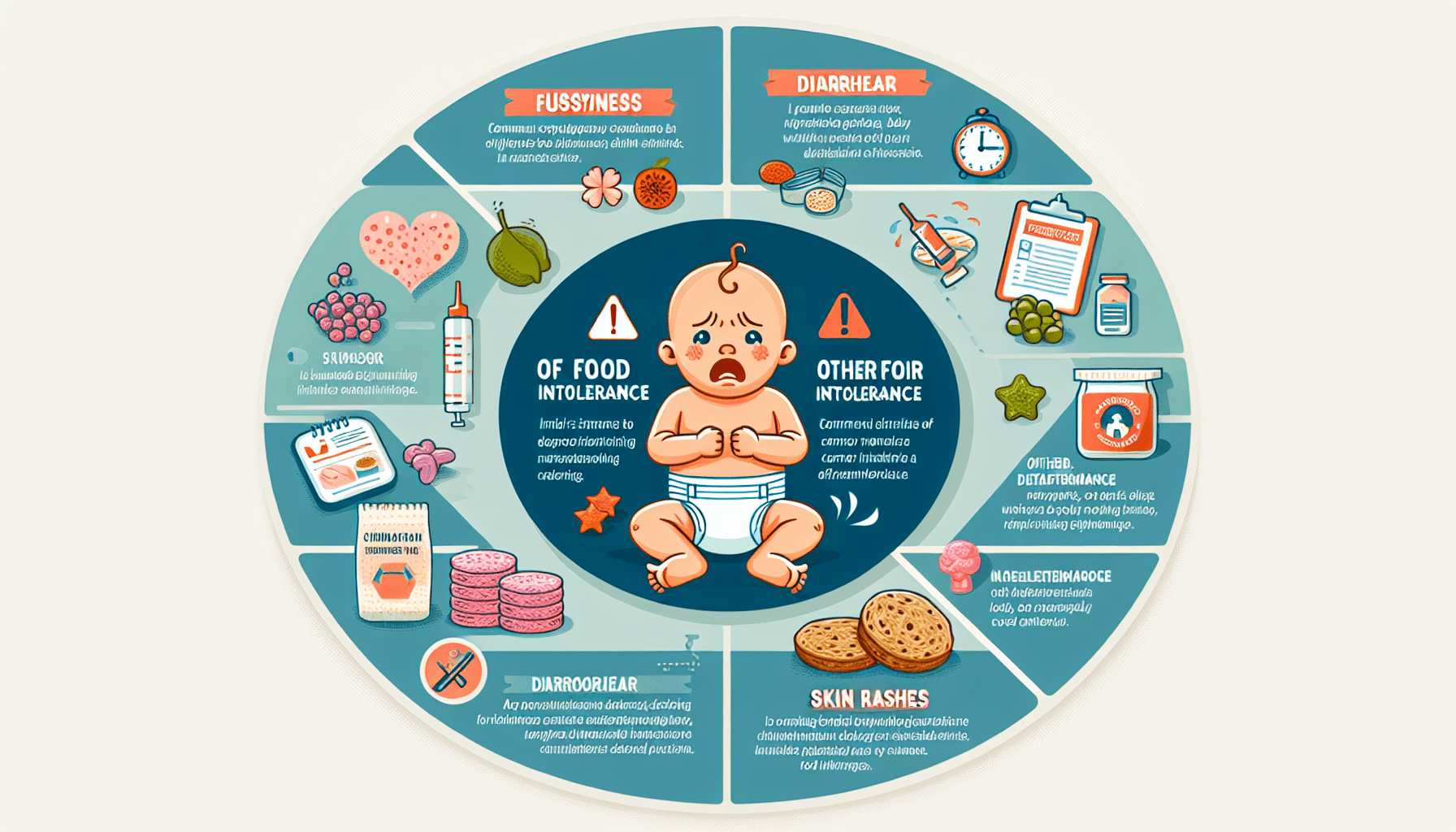
Have you noticed your baby experiencing discomfort after feeding? It could be possible that your little one is showing signs of a food intolerance. Food intolerances in babies can manifest themselves in various ways, from digestive issues to skin rashes. Understanding these signs is crucial in helping you identify and address any potential food intolerances your baby may have. In this article, we will explore some common signs of food intolerance in babies and provide helpful tips on how to manage them.

Digestive Issues
Frequent spitting up
One common sign of a food intolerance in babies is frequent spitting up. If your baby is consistently regurgitating their food shortly after feeding, it could be a result of their digestive system struggling to process certain foods. This can be quite common during the early stages of introducing solid foods, as their digestive system is still developing.
Vomiting
Vomiting is another digestive issue that may indicate a food intolerance in babies. While spitting up is relatively mild, vomiting often involves more forceful and larger amounts of expelled food. If you notice that your baby is vomiting frequently after meals, it’s essential to consult with their pediatrician to determine if a food intolerance is the underlying cause.
Diarrhea
Diarrhea is a common symptom of food intolerance in babies, particularly if it occurs chronically or after consuming specific foods. Diarrhea can lead to frequent, loose, watery stools, which can potentially result in dehydration if not addressed promptly. If you notice persistent diarrhea in your baby, it’s crucial to seek medical advice.
Constipation
On the other end of the spectrum, constipation can also be a sign of a food intolerance in babies. If your baby is experiencing difficulty passing stools or their stools are hard and pellet-like, it could be related to a food intolerance. It’s important to monitor their bowel movements and discuss any concerns with their healthcare provider.
Bloody stools
In some cases, a food intolerance may lead to bloody stools in babies. If you notice red streaks or blood in your baby’s stool, it’s essential to seek immediate medical attention. Bloody stools can be a sign of a more severe condition, and prompt evaluation is necessary to ensure your baby’s health and well-being.
Skin Reactions
Rashes
Rashes are a common indicator of a food intolerance in babies. These rashes can appear as red, raised bumps or patches on your baby’s skin. They may be itchy or uncomfortable for your little one. If you notice persistent rashes that coincide with certain foods, it’s worth discussing with your pediatrician to determine if there is an underlying food intolerance at play.
Hives
Hives are another skin reaction that may indicate a food intolerance in babies. Hives typically appear as raised, itchy bumps on the skin that can vary in size and shape. If you notice your baby developing hives after consuming specific foods, it’s important to consult with their healthcare provider.
Eczema
Eczema, also known as atopic dermatitis, is a chronic skin condition that can be triggered or exacerbated by food intolerances in babies. Eczema often presents as dry, itchy, and inflamed patches of skin. If your baby has persistent eczema that worsens after consuming certain foods, it may be worth exploring the possibility of a food intolerance.
Redness
Generalized redness of the skin can be a sign of an adverse reaction to certain foods in babies. If you notice your baby’s skin becoming red or flushed after consuming certain foods, it may be related to a food intolerance. It’s crucial to pay attention to any patterns or consistent reactions and discuss them with your pediatrician.
Swelling
Swelling, particularly of the lips, tongue, or face, can indicate a severe allergic reaction or food intolerance in babies. If you notice any signs of swelling after your baby consumes specific foods, it’s essential to seek immediate medical attention, as this could be a symptom of a potentially life-threatening condition known as anaphylaxis.
Respiratory Problems
Coughing
Coughing can be a sign of a food intolerance in babies, especially if it occurs shortly after eating certain foods. Pay attention to the timing of your baby’s cough and any patterns that may suggest a particular food is triggering the symptom. Consulting with your child’s healthcare provider can help determine if a food intolerance is the underlying cause.
Wheezing
Wheezing, characterized by a high-pitched or whistling sound when your baby breathes, can be a worrisome symptom of a food intolerance. Wheezing can be a sign of airway inflammation or constriction, suggesting a more severe reaction. If your baby experiences wheezing after consuming specific foods, seek immediate medical attention.
Runny nose
A runny nose is a common symptom of many conditions, including food intolerance. If you notice that your baby consistently has a runny nose after eating certain foods, it may suggest a food intolerance. However, it’s essential to consider other factors, such as environmental allergens or viruses, before concluding a food intolerance is the cause.
Sneezing
Sneezing is the body’s natural response to clear irritants from the nasal passages. While occasional sneezing is normal, persistent sneezing following the ingestion of certain foods can indicate a food intolerance. If you notice that your baby consistently sneezes after specific meals, it’s worth discussing with their healthcare provider.
Congestion
Congestion, characterized by a stuffy or blocked nose, can occur as a result of a food intolerance in babies. If your baby experiences persistent nasal congestion after consuming certain foods, it may indicate an immune system response to those particular foods. It’s important to consult with your pediatrician for further evaluation and guidance.
Behavioral Changes
Irritability
Irritability is a common behavioral change that may indicate a food intolerance in babies. If you notice that your baby becomes more fussy or irritable after eating certain foods, it could suggest they are experiencing discomfort or distress from a food intolerance. Monitoring their behavior and discussing any concerns with their healthcare provider is advisable.
Fussiness
Similar to irritability, increased fussiness is another behavioral change that can be associated with a food intolerance in babies. If your baby seems particularly fussy or difficult to soothe after consuming certain foods, it may be worth exploring the possibility of a food intolerance. Keeping a food diary can help identify potential triggers and facilitate discussions with your pediatrician.
Difficulty sleeping
Difficulty sleeping is another behavioral change that may be linked to a food intolerance in babies. If your baby has trouble settling down or staying asleep after consuming certain foods, it could be a sign of discomfort or gastrointestinal distress. Proper sleep is vital for a baby’s overall well-being, so discussing this issue with their healthcare provider is important.
Excessive crying
Excessive crying, particularly inconsolable crying, can be a symptom of a food intolerance in babies. If your baby seems to cry more than usual, especially after mealtime, it’s worth considering if a food intolerance is the cause. Seeking guidance from a healthcare provider can help identify the underlying issue and provide appropriate management strategies.
Agitation
Agitation, characterized by restlessness or increased irritability, can be a behavioral change associated with a food intolerance in babies. If your baby becomes noticeably more agitated after consuming certain foods, it may be related to the presence of a food intolerance. Addressing these concerns with their pediatrician is essential for proper evaluation and guidance.

Growth and Weight Issues
Failure to thrive
Failure to thrive refers to inadequate weight gain and growth in babies. It can be a significant concern and may be associated with a food intolerance. If your baby consistently falls below the expected growth percentiles or fails to gain weight at an appropriate rate, it’s important to consult with their pediatrician to assess for any potential underlying food intolerances.
Poor weight gain
Poor weight gain is another issue that may be related to a food intolerance in babies. If your baby is not gaining weight as expected, it could suggest that their body is struggling to absorb the necessary nutrients from the foods they consume. It’s important to address poor weight gain promptly to ensure your baby’s proper development and well-being.
Delayed growth
Delayed growth can present as a slower than usual progress in height and overall physical development. If your baby’s growth appears to be significantly slower than their peers or the expected milestones, it may be worth considering if a food intolerance is contributing to this delay. Consulting with their healthcare provider is crucial for a thorough evaluation.
Developmental delays
Developmental delays refer to a lag in reaching developmental milestones, such as rolling over, sitting up, or crawling. While various factors can contribute to developmental delays, a food intolerance may be one possible cause. It’s important to monitor your baby’s developmental progress and discuss any concerns with their pediatrician for appropriate evaluation and guidance.
Low energy
Low energy or lethargy can be a symptom of a food intolerance in babies. If your baby consistently appears tired, lacks interest in their surroundings, or has difficulty engaging in typical activities, it may suggest an underlying issue affecting their energy levels. Addressing these concerns with their healthcare provider can help determine the cause and appropriate management strategies.
Respiratory Problems
Coughing
Coughing can be a sign of a food intolerance in babies, especially if it occurs shortly after eating certain foods. Pay attention to the timing of your baby’s cough and any patterns that may suggest a particular food is triggering the symptom. Consulting with your child’s healthcare provider can help determine if a food intolerance is the underlying cause.
Wheezing
Wheezing, characterized by a high-pitched or whistling sound when your baby breathes, can be a worrisome symptom of a food intolerance. Wheezing can be a sign of airway inflammation or constriction, suggesting a more severe reaction. If your baby experiences wheezing after consuming specific foods, seek immediate medical attention.
Runny nose
A runny nose is a common symptom of many conditions, including food intolerance. If you notice that your baby consistently has a runny nose after eating certain foods, it may suggest a food intolerance. However, it’s essential to consider other factors, such as environmental allergens or viruses, before concluding a food intolerance is the cause.
Sneezing
Sneezing is the body’s natural response to clear irritants from the nasal passages. While occasional sneezing is normal, persistent sneezing following the ingestion of certain foods can indicate a food intolerance. If you notice that your baby consistently sneezes after specific meals, it’s worth discussing with their healthcare provider.
Congestion
Congestion, characterized by a stuffy or blocked nose, can occur as a result of a food intolerance in babies. If your baby experiences persistent nasal congestion after consuming certain foods, it may indicate an immune system response to those particular foods. It’s important to consult with your pediatrician for further evaluation and guidance.

Musculoskeletal Problems
Joint pain
Joint pain in babies can be challenging to identify, but it may manifest as increased irritability, refusal to crawl or bear weight, or crying when specific movements are attempted. If you notice any signs of joint pain after your baby consumes certain foods, it’s important to discuss this with their healthcare provider for proper evaluation and management.
Muscle aches
Muscle aches in babies can be subtle, but you may notice signs such as increased fussiness, difficulty sleeping, and reluctance to engage in physical activities. If your baby consistently exhibits these symptoms after consuming certain foods, it’s essential to consult with their healthcare provider to determine if a food intolerance is the underlying cause.
Inflammation
Inflammation can affect various parts of the body and may be associated with a food intolerance in babies. Signs of inflammation can include redness, heat, swelling, and tenderness. If you notice any of these symptoms in specific areas of your baby’s body after eating certain foods, it’s important to seek medical advice to address the underlying cause.
Stiffness
Stiffness in babies’ joints and muscles can be an indication of a food intolerance. If you observe limited mobility, resistance to movement, or discomfort during attempts to flex or extend joints, it may suggest an underlying issue related to a food intolerance. Consulting with your child’s healthcare provider is crucial for proper evaluation and management.
Limited mobility
Limited mobility is another musculoskeletal problem that may be related to a food intolerance in babies. If you notice that your baby has difficulty moving certain body parts or seems less active than usual after consuming certain foods, it may suggest an adverse reaction. It’s important to address these concerns with their healthcare provider for further evaluation.
Neurological Symptoms
Headaches
Headaches can be challenging to diagnose in babies, but you may observe signs such as increased irritability, crying, rubbing their head, or resisting being laid down. If you suspect that your baby is experiencing headaches, it’s important to discuss this with their healthcare provider to rule out any underlying causes, including potential food intolerance.
Migraines
Migraines in babies can present with severe, throbbing head pain, sensitivity to light and sound, vomiting, and lethargy. While rare in infants, migraines can be triggered by certain foods in susceptible individuals. If your baby exhibits these symptoms after consuming specific foods, seeking medical attention is crucial for appropriate management.
Seizures
Seizures are a neurological symptom that requires immediate medical attention. While seizures can have various causes, including epilepsy, certain foods can trigger seizures in individuals with specific sensitivities. If your baby experiences seizures after consuming certain foods, it’s essential to seek emergency medical attention and consult with their healthcare provider.
Dizziness
Dizziness is not commonly observed in infants, but you may notice signs such as unsteady movements, difficulty balancing, or holding their head at an odd angle. If you suspect that your baby is experiencing dizziness, it’s important to discuss this with their healthcare provider and explore potential underlying causes, including a food intolerance.
Poor concentration
While infants do not exhibit concentration issues in the same way adults do, you may notice signs such as increased inattentiveness or difficulty focusing on toys or their surroundings. If you have concerns about your baby’s concentration or attention span, discussing this with their healthcare provider can help determine if a food intolerance may be contributing to it.

Blood Abnormalities
Anemia
Anemia refers to a decreased number of red blood cells or low levels of iron in the blood. In babies, signs of anemia may include paleness of the skin, fatigue, irritability, and poor appetite. If your baby exhibits these symptoms, it’s important to consult with their healthcare provider to determine if an underlying food intolerance may be contributing to their anemic state.
Low platelet count
Platelets play a crucial role in blood clotting, and a low platelet count can result in easy bruising or prolonged bleeding. If you notice unexplained bruising, excessive bleeding from minor cuts, or prolonged bleeding after vaccinations in your baby, it’s essential to seek medical attention to evaluate their platelet count. A food intolerance may be one potential cause.
Abnormal clotting
Abnormal clotting refers to either excessive or poor blood clotting, leading to unusual bleeding or blood clots. If you notice unexplained bleeding or blood clots in your baby, it’s important to seek medical attention to evaluate their clotting factors. A food intolerance may contribute to abnormal clotting in some cases.
Unexplained bruising
Unexplained bruising in babies can be concerning and may indicate an underlying issue affecting their ability to clot blood properly. If you notice frequent bruises in unusual or protected areas or if your baby bruises easily without a clear cause, it’s crucial to consult with their healthcare provider to assess for any potential underlying food intolerances or clotting disorders.
Pale complexion
A pale complexion, particularly in combination with other symptoms such as fatigue or poor appetite, can be indicative of anemia or other blood abnormalities. If your baby appears unusually pale or lacks the typical healthy pink color, discussing this with their healthcare provider is crucial for proper evaluation and management.
Other Symptoms
Chronic fatigue
Chronic fatigue in babies can be challenging to identify, but you may observe signs such as excessive sleepiness, decreased interest in typical activities, or difficulty waking up. If you suspect that your baby is experiencing chronic fatigue, it’s essential to consult with their healthcare provider to explore potential underlying causes, including a food intolerance.
Allergic shiners (dark circles under the eyes)
Allergic shiners, dark circles under the eyes, can be an indication of an allergic reaction or food intolerance in babies. If you notice persistent, dark circles under your baby’s eyes, particularly in combination with other allergy-like symptoms, it’s important to discuss this with their healthcare provider for proper evaluation and management.
Reflux
Reflux, or gastroesophageal reflux, is a common occurrence in babies. However, if your baby experiences excessive or persistent reflux, it may suggest an underlying food intolerance. Reflux can cause discomfort and irritability, so monitoring your baby’s symptoms and discussing them with their healthcare provider is important for appropriate management.
Gassiness
Gassiness is a common symptom that can be associated with a food intolerance in babies. Excessive gas can cause abdominal discomfort and may result in fussiness or crying. If you notice consistent gassiness in your baby, it’s worth discussing this with their healthcare provider to evaluate for potential food intolerances or other underlying issues.
Ear infections
While ear infections can have various causes, including bacterial or viral infections, they may also be associated with food intolerances in some cases. If your baby experiences recurring or persistent ear infections, it’s essential to consult with their healthcare provider to determine if a food intolerance is contributing to their susceptibility to these infections.
Conclusion
Recognizing the signs of a food intolerance in babies is crucial for their overall health and well-being. Digestive issues, skin reactions, respiratory problems, behavioral changes, growth and weight issues, musculoskeletal problems, neurological symptoms, blood abnormalities, and other symptoms can all indicate a food intolerance. If you suspect your baby may have a food intolerance, it’s important to consult with their healthcare provider for appropriate evaluation, guidance, and potential dietary modifications.