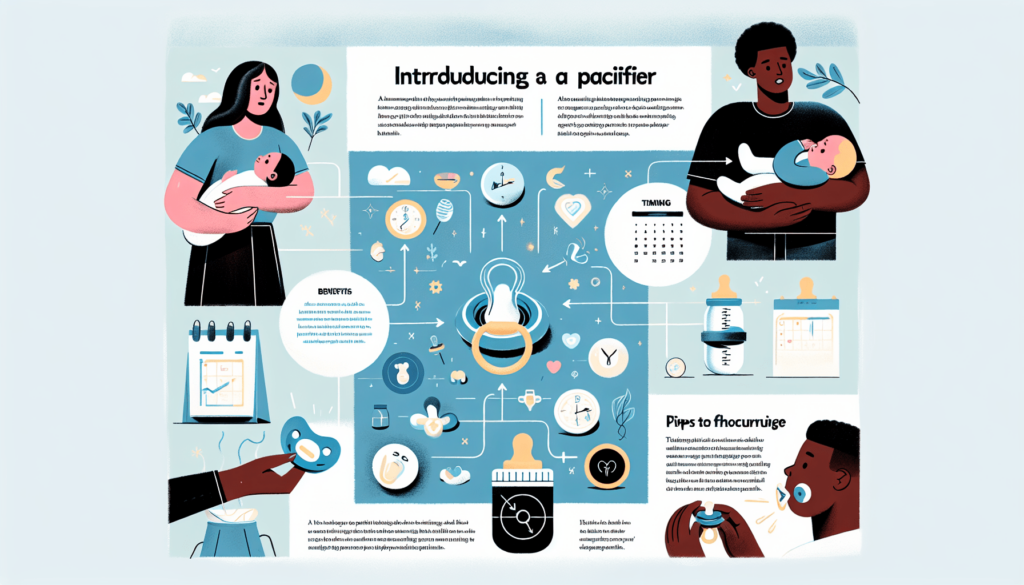
Are you a new parent wondering when the right time is to introduce a pacifier to your little one? We’ve got you covered! The decision to use a pacifier can be a personal one, but it’s important to consider the developmental stage of your baby. In this article, we will explore the ideal timing for introducing a pacifier and provide some helpful tips for a smooth transition. So, if you’re curious about when to start giving your baby a pacifier, keep reading to find out all the information you need.

Age Considerations
Newborns
When it comes to introducing a pacifier to your newborn, it’s important to consider a few factors. Most experts suggest waiting until breastfeeding is well-established, usually around three to four weeks, before introducing a pacifier. This allows your baby to develop a strong latch and establish a successful breastfeeding routine. Keep in mind that every baby is different, so it’s essential to consult with your pediatrician before introducing a pacifier at such an early stage.
Around 3-4 Weeks
Once your baby is around three to four weeks old and breastfeeding is going smoothly, you can consider introducing a pacifier. At this stage, your baby’s sucking reflex is strong, and they may find comfort in using a pacifier. Pacifiers can also help soothe your baby between feedings and provide a sense of security. However, it’s always important to monitor your baby while they use a pacifier to ensure they don’t become dependent on it.
Around 6 Weeks
Around the six-week mark, your baby’s digestive system is becoming more mature, and they may start to experience some discomfort from gas or mild colic. A pacifier can help provide temporary relief by stimulating their sucking reflex and offering a source of comfort. As always, it’s crucial to pay attention to your baby’s cues and consult with your pediatrician for guidance on introducing a pacifier at this stage.
Around 3 Months
By the time your baby reaches three months, they have likely settled into a more predictable routine, and their sucking reflex may have diminished. This is a good time to evaluate if your baby still needs a pacifier or if they can soothe themselves through other means, such as self-soothing techniques or thumb-sucking. It’s important to remember that every baby is unique, so your pediatrician can help you determine when it’s appropriate to start weaning from pacifier use.
Feeding Factors
Breastfeeding
If you are breastfeeding, it’s important to establish a successful breastfeeding routine before introducing a pacifier. The first few weeks are crucial for both you and your baby to develop a strong latch, and introducing a pacifier too soon can cause nipple confusion and make breastfeeding more challenging. Once your baby has gained weight and shown signs of a successful breastfeeding relationship, you can consider introducing a pacifier if needed.
Bottle Feeding
If you are bottle feeding your baby, you may have more flexibility when it comes to introducing a pacifier. Bottle-fed babies do not have the same risk of nipple confusion as breastfed babies, so you can introduce a pacifier earlier if desired. However, it’s still essential to monitor your baby’s use of the pacifier and ensure they are not becoming overly dependent on it.
Sleeping Patterns
Trouble Falling Asleep
If your baby has trouble falling asleep, a pacifier can be a useful tool to help soothe them and promote sleep. The sucking action can provide comfort and help your baby relax, making it easier for them to fall asleep. Just make sure to remove the pacifier gently once your baby is asleep to prevent it from becoming a sleep association that they rely on to stay asleep throughout the night.
Waking Frequently
If your baby wakes frequently during the night, a pacifier can help them self-soothe and potentially lengthen their sleep cycles. When your baby wakes up, offering them a pacifier can help them soothe themselves back to sleep without requiring your assistance. However, it’s important to strike a balance and not rely solely on the pacifier for sleep, as you want your baby to learn independent sleep skills.
Nighttime Soothing
A pacifier can be an effective tool for nighttime soothing. When your baby wakes up, having a pacifier readily available can help calm them down and promote relaxation. It can also help reduce the need for other forms of nighttime soothing, such as rocking or nursing, which can become tiresome for both you and your baby. Just be sure to establish a consistent bedtime routine to signal to your baby that it’s time for sleep.
Comfort and Soothing
Fussy Baby
If you have a fussy baby who is often crying or seems difficult to console, a pacifier can be a valuable source of comfort. The sucking motion can help soothe your baby and provide them with a sense of security. However, it’s important to address any underlying issues that may be causing your baby’s fussiness, such as hunger, discomfort, or a dirty diaper, before relying solely on a pacifier for soothing.
Crying Spells
When your baby is experiencing crying spells, especially during the evening hours, a pacifier can offer temporary relief. The sucking action can help calm your baby and provide them with a distraction from the discomfort they may be feeling. However, if your baby’s crying persists or becomes excessive, it’s important to consult with your pediatrician to rule out any underlying medical conditions.
Colic
If your baby is diagnosed with colic, a pacifier can be a helpful tool in providing temporary relief. The sucking motion can help soothe your baby and provide a distraction from the discomfort associated with colic. However, it’s essential to consult with your pediatrician for guidance on dealing with colic and to ensure that a pacifier is an appropriate solution for your baby’s specific needs.

Thumb Sucking
Replacing Thumb Sucking
If your baby has developed a habit of thumb sucking, introducing a pacifier can offer a more easily replaceable option. Thumb sucking can be a challenging habit to break, especially as your baby gets older. By offering a pacifier, you have more control over when and how often your baby uses it, making it easier to gradually wean them from the pacifier when the time is right.
Weaning from Thumb Sucking
If your baby has become reliant on a pacifier, you may be wondering how to transition them away from it. Weaning from thumb sucking can be a gradual process that requires patience and consistency. Start by limiting pacifier use to specific times, such as naptime and bedtime. Then, gradually reduce the amount of time your baby spends with the pacifier until they no longer rely on it for comfort. Offering alternative comfort objects, such as a stuffed animal or blanket, can also help during the weaning process.
Nipple Confusion
Breastfeeding challenges can arise when introducing a pacifier too early, leading to nipple confusion. Nipple confusion occurs when a baby becomes accustomed to the artificial nipple of a pacifier or bottle and has difficulty latching onto the breast. To avoid this, it’s recommended to establish a solid breastfeeding routine before introducing a pacifier. If nipple confusion does occur, working with a lactation consultant can help address the issue and ensure successful breastfeeding.

Dental Issues
Orthodontic Concerns
One concern often associated with pacifier use is the potential for orthodontic problems, such as misalignment of the teeth or jaw. Prolonged or excessive pacifier use can affect the positioning and development of the teeth, particularly if the pacifier is used beyond infancy. However, if used in moderation and phased out at an appropriate age, the risk of orthodontic issues can be minimized.
Potential Tooth Misalignment
In some cases, long-term pacifier use can contribute to tooth misalignment. The sucking action can put pressure on the developing teeth and affect their alignment. If you notice any changes in your child’s bite or alignment of their teeth, it’s important to consult with a pediatric dentist to address any potential issues. Regular dental check-ups can help monitor your child’s oral health and ensure that any concerns are identified early on.
General Guidelines
Consulting Pediatrician
Before introducing a pacifier to your baby, it’s always important to consult with your pediatrician. They can provide personalized guidance based on your baby’s specific needs and development. Your pediatrician can also help address any concerns or questions you may have regarding pacifier use and weaning.
Choosing the Right Pacifier
When choosing a pacifier for your baby, opt for a one-piece design without any detachable parts. This reduces the risk of choking hazards and makes cleaning easier. Look for a pacifier made from durable and safe materials, such as silicone or latex-free rubber. It’s also essential to replace pacifiers regularly to maintain their safety and hygiene.
Handling and Cleaning
To ensure the safety and cleanliness of your baby’s pacifier, it’s important to handle and clean it properly. Before each use, inspect the pacifier for any signs of wear or damage. Clean the pacifier regularly by washing it with warm, soapy water and rinsing it thoroughly. Avoid placing the pacifier in your mouth or cleaning it with your saliva, as this can transfer bacteria to your baby.
When to Avoid Pacifiers
Sleeping and Napping
While pacifiers can be beneficial during sleep and naptimes, it’s essential to monitor their use. Once your baby is asleep, gently remove the pacifier from their mouth to reduce the risk of dependency. Avoid reinserting the pacifier every time your baby stirs during sleep, as this can disrupt their ability to self-soothe and fall back asleep independently.
Breastfeeding Difficulties
If your baby is experiencing difficulties with breastfeeding, such as latching issues or low milk supply, it’s generally recommended to avoid introducing a pacifier until these problems are resolved. The sucking action and different latch required for pacifier use can sometimes make breastfeeding challenges even more complicated. Working with a lactation consultant can help address these issues and ensure successful breastfeeding.
Dental Problems
If your baby has existing dental problems, such as tooth or jaw abnormalities, it’s important to consult with a pediatric dentist before introducing a pacifier. Certain dental conditions may be aggravated by pacifier use, so it’s crucial to assess the potential risks and determine if a pacifier is appropriate for your baby.
Gradual Pacifier Weaning
Developing a Weaning Plan
When the time comes to wean your baby from pacifier use, it’s best to do it gradually. Suddenly taking away the pacifier can be challenging for your baby, as it has become a source of comfort and security. Start by limiting pacifier use to specific times, such as naptime and bedtime, and gradually reduce the amount of time your baby spends with the pacifier. Offering alternative comfort objects, such as a stuffed animal or blanket, can help ease the transition.
Introducing Comfort Alternatives
During the weaning process, it’s important to provide alternative sources of comfort for your baby. This can include introducing a lovey or transitional object that your baby can cuddle with instead of using a pacifier. Comforting techniques, such as gentle rocking or soothing music, can also be helpful during this transition period. Be patient and supportive as your baby adjusts to the change, and remember that every child is unique in their ability to adapt to new habits.
Overall, introducing a pacifier to your baby can provide comfort and soothe them during various stages of their early development. However, it’s crucial to consider the age of your baby, their feeding method, and any potential concerns regarding nipple confusion, dental issues, or overuse. By following general guidelines and consulting with your pediatrician, you can make informed decisions about pacifier use and gradually wean your baby when the time is right.